WEBINAR REPLAY
What Are You Not Talking About?
How to have the difficult conversations that matter.
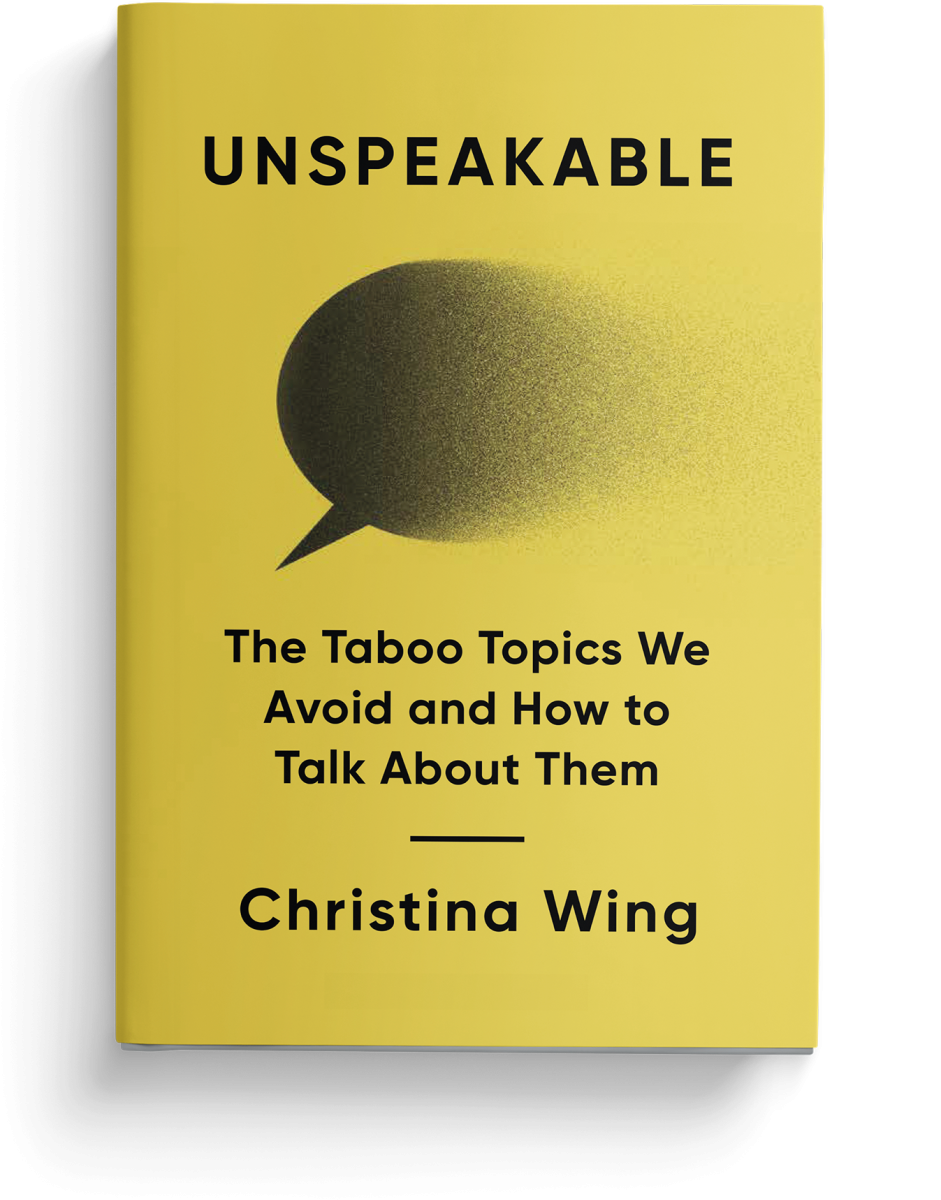
In this one-hour session, Christina Wing, author of Unspeakable, joins her Harvard Business School colleague Tsedal Neeley to explore why we avoid the subjects that matter most and how to begin them. Together, they work through real situations submitted anonymously by the audience, from inheritance and succession to transparency about family money.


Transcript generated from the recording. Minor transcription errors may occur. 0:00 We'll say hello everyone and a very warm welcome. I'm Tsedal Neeley. I'm on the faculty of the Harvard Business School and I am your host for the next hour. Three things before we get started. We're recording and every registrant gets a replay, and anything you submit today will be anonymous. Um, let me begin by saying why I said yes to hosting this. First of all, Christina is a very special friend and colleague, and I'm really excited about this incredible work she's been doing. The second reason is I spend so much time working with people who work together anywhere from boards to top leadership teams to 0:49 um uh uh uh teams across organizations, and one of the most common patterns that I see isn't conflict. It's silence. A team knows something. They suspect something, but no one says it. And so people fill the gap with assumptions, and some of those assumptions are sometimes very wrong. Families do the same thing, and most of us have one of these right now, a conversation we've had in our minds, we've rehearsed, but we've never held. So, Christina Wing has spent her career on exactly uncovering this phenomenon. 1:35 She's, as I mentioned, on the faculty of Harvard Business School. She's the founder of Wingspan Legacy Partners, where she advises founders and family enterprises on the decisions they keep postponing. And her new book, Unspeakable, is out October 20th. When she walks into a room, she asks one question, and I love this. This is so awesome. What are you not talking about? Then she helps people answer it out loud. So in the next hour, uh, this is how we're going to spend our time. So the first half, Christina is going to help us understand how do we recognize these subjects, 2:22 why good people avoid them, and how to begin. In the second half, we'll work through real situations with scenarios and questions that many of you submitted anonymously, and Christina and I will work through them live occasionally I may play the part of the question, uh, uh, submitter to see if we can probe a little deeper, but. That's how we're going to spend the next hour. So, Christina, welcome. Let's get started. Vidal, thank you so much for having me. I'm excited and I'm so excited to see so many familiar faces from around the world. And by the way, I know many of you are avoiding certain topics. So I hope you learned something today 3:09 — and that we unlock a — few. It turns out many of us avoid certain topics and The first thing that I'd like to ask everyone is I'm going to ask you, and I want you to answer this in chat, OK? Prepare to answer this question in chat. And I'm going to ask you which of these are the hardest for you to raise, OK? Are you ready? Put them in chat. Money. Succession. Age. Inheritance. Failure. Performance or politics. 3:54 Which one is the hardest? I can see, I can see some of you looking at each other like, uh, all hard. So, they're coming in, Christina, anywhere from age to failure to, oh, age comes up a lot. I don't blame you. Money. Um, Christina, you call these topics unspeakables. What makes something unspeakable? And not just an awkward topic, unspeakable. So, awkward is really about comfort. An unspeakable is something you're not sure you have the permission to bring up. And what people don't realize is like you started with at the beginning, not bringing it up, that silence fills the gap and decisions get made for you. 4:43 And so these topics have gained in momentum. When I was growing up, the two topics were politics and religion. You didn't talk about those and you were safe. Now the list has gone to all the ones you've added, including death, estate planning, so many things we can't speak about that we tend to only speak about Netflix, sports, and food. I mean, we're really minimizing our interaction. Yeah. But the question for me is, I think most people listening would say they talk about hard things all the time, right? Uh, and, and I think we do. We talk about hard things all the time. But how do we recognize the part we are not talking about? 5:28 — How do we even — know? So, first of all, most people talk about hard things behind other people's backs. They don't talk about it with the correct person. And so they, they talk about it behind people's backs. They speculate, they worry, and they never take it to the heart of the issue. And, you know, there are cultural norms. You know, we have a global audience. There are cultural norms that make some people feel it's not their place to bring it forward. There are families and businesses and organizations where people have seen retaliation if you bring something up. Um, there's also a genuine concern and love for the person you're 6:16 bringing it to that you're gonna hurt their feelings because, let, let's be very clear, there are difficult moments and there are difficult conversations. A difficult moment, you don't have a. Common goal. A difficult moment is firing somebody. A difficult moment is breaking up with somebody. That is not a taboo topic. An unspeakable is a place where you have a common goal, but you might have different opinions and you have to learn. It's not a dialogue one way. It's a conversation where you have to learn. You have to listen, but you have to bring it up. So as I'm hearing you say this though, uh, Christina, I see risk, risk, risk, risk, right? What you described, 7:01 anything from the retaliation or uh the loss of something meaningful. So there's a ton of risk associated and then if we look at the, at the The what people put in the chat, failure, money, politics, lots on failure, by the way, performance, money, um, but a lot of things that are risky to talk about, but you have a whole book saying talk about these things. The risk is bigger to not talk about these things. I mean, let's talk about failure for a minute. We all wanna live in it and work in an organization that gives permission to fail, cause that's how you learn. If you're in an organization where you can never talk about failure, 7:47 then if you do something wrong as an employee, you hide it. But if you're in an organization where failure is almost celebrated, like failing well, learning and moving forward, then we start to bring each other together, you know, um, growing up, my father, when I, if I'd ski was go skiing with him, and I'd come home and say, I didn't fall today, he's like, well, then you're not getting better, but you're not leaning forward more and you're not trying other things. And so failure should really be something we celebrate. And especially for the rising gen, how do we expect the rising gen in any organization to learn how to make decisions and do things if they don't have permission to fail? 8:33 It's, it's, it's, it's interesting because what you're also talking about is making these things discussable, uh, because if you make them discussable, then people can treat them, can work with them, etc. You know, in my work with teams, with groups, I see people, and I touched on this earlier, fill silence with all sorts of assumptions, all sorts of assumptions, especially when they're not in the same room. You talked about what people do behind people's backs. So what happens to a family, a company when assumptions replace shared information? Well, I mean, a, a perfect example would be succession. 9:21 Um, we've had this horrible thing where we tie succession with age. And so we suddenly, we don't talk about succession until somebody is also old. And then all of a sudden we're talking about their age and their ability at the same time. When in reality we should have started talking about succession when they took that job 10 years ago, um, so when we don't talk about it, what happens is people start to conspire, people start to push, or your best talent leaves the. Company because they say she's never moving out of that CEO role. I'm gonna take a CEO job somewhere else. And it, it really fosters this place of gossip 10:06 and succession is at the top of that. I put estate planning as a close second. You know, many people have their estate plan done, but they don't tell their family. They don't tell them what their responsibility will be. Nor do they tell them their wishes. And so people start to speculate. I bet Sidal's gonna get more than me. I bet Sidal's gonna get the business. I bet this. I'm not telling people to run out into the street and tell everybody what's in their estate plan and who's getting what money. Forget the money part. Tell them the responsibilities. If something happens to me, Sidal, you would be in charge of my business. And I want you to take over my class in this. I don't have to tell you, and it comes with $100. But at least 10:52 you should know there's a plan, because if you don't, your three sisters are also wondering, and then they hear that plan from a lawyer. It's the worst thing to hear wishes from a lawyer. Typically, you don't even know the lawyer. That's such a good example, and you know, we were talking about this earlier. Um, I come from a family of entrepreneurs, parents, grandparents, uh, entrepreneurs, and boy does it get tricky with family because it's, we, we work together, but we're also family for life, right? Families for life. One thing that you talked about earlier that I want to double click on is this idea of shared goals, 11:39 um, and you argue that a shared goal is what makes a difficult conversation worth the work. How do you find the shared goal when two people seem to want opposite things and people are very passionate about their opposite things. How does that work? So what's interesting is without getting to a common goal you can't even have this conversation. But let's say, let's use succession as an example. Let's say you want to be the successor and I wanna be the successor. Our common goal is we know the company needs a succession plan. 12:26 So a difficult subject doesn't mean we come into it with agreement. We find the issue that we are trying to solve for, and then we speak. I, I caution everybody that in these topics you have to be going for the win-win. If you're going for the win, you're gonna lose. Because if you're going for the win, it means two things. It means number 1, you're pre-pissed. You're already pissed before you start the conversation and nothing good is gonna come. And 2, you're actually coming in to give a speech, not to have a conversation. And so if you can't be open to the other person's side and opinion, 13:11 don't start this topic right away. Get better, get help, practice. Just, you have to be willing to, to listen, and I don't know about you at all. Um, we don't normally talk about how we grade, but in my classroom, I give lots of points for people that change their mind during the course. It's in the class, if somebody says, I came in, dead set that, but what Sidal said made me change my mind, I'm like, what a good listener. And so be ready to change your mind and, and to be open to influence, to be open to influence. You know, this reminds me of what we talk about being either an inquiry mode versus advocacy mode, 13:57 right? In inquiry mode, you're, you're asking questions, you're listening, you're pausing from advocating a position. And we, if we move straight to advocacy, we will never hear the other side and be genuinely open to, to influence. I, I'd love for you, uh, Christina, to, to walk us through the choices before a conversation of this type starts, right? I'm thinking about when, where, who's in it, what were. To use and which one of these people get wrong the most. So can you make this a little bit more concrete for us? We're gonna do some life coaching in a little bit and if any of you have any questions as you're listening to this, 14:45 please put it in the chat. We'll, we'll try to pick up some of those, but walk us through some of these choices that you've thought a lot about and that you studied. You know, I thought a lot about, and I also made a lot of these mistakes. Let's be clear, you know, you, you don't just wake up and do all this right. I'm still learning. The number one mistake people make is they wait too long. And so they wait too long to have the conversation, and so they. Go into that mode I'm talking about, about being pre-pissed, and then when somebody does something very minor, you attack them. You bring it up, you bring up everything, and now it's not just about the issue, it's also about you didn't walk the dog, you left your plate, you, you pile on, you bring everything you're annoyed with. So, that's the first thing people do wrong. 15:31 So, number one, don't wait too long. But then, in the actual tactics, what people do wrong is they call you. So, you pick up the phone and you're like, hi, Sidal, I'd like to talk to you tomorrow about sales. You're just leaving the dentist's office. You're cranky, you have kids crying in the backseat of your car. Who knows what's going on, and you say, let's talk about it now. You are never gonna have somebody call you and say they wanna talk about a topic that you're not gonna wanna just jump into. So you have already set it up to fail because you don't know where the person is. You haven't given them time and they feel ambushed. So the way to do this is an email, 16:16 and what the email needs to do is be clear enough to not create. Overexcitement where somebody thinks they're getting fired or yelled at, but vague enough that it doesn't um let the other party overprepare and come in in advocacy mode as you said. So the email is, dear Sidal, I've been, I, I'd like to get together and talk about sales. Are you free to meet at Starbucks on Tuesday? Any time or 9 a.m. or 2 days and so you send an email, you give the topic, you give a neutral place because in this setting, um, I'm your boss, so I'm not summoning you to my office where there's a power dynamic. 17:04 The topic is there and the person writes back, no, OK, what do you do? You say, I understand. How about next week, these dates? You don't give up. When the person says yes and you go to Starbucks, first of all, my recommendation, get there a couple of minutes early. Make sure you get a nice table. Maybe even ask them in advance, what would you like? I'll order it. And when you sit down, um, talk for a second, and then say, I've really been thinking about this for a long time. Here are some norms I'd like to put out. Um, I have a bad habit of interrupting. So I'm going to, I'm gonna say what, what I wanted to, please, and then I'm going to stop talking, and I'm gonna listen. Also, 17:50 if after I say what I wanna say, you don't feel comfortable proceeding right now, we can pick it back up in another day. I want you to be comfortable, but I just want you to know I'm gonna sit and listen and that. And typically that puts the person somewhat at ease. Um, the next thing is, you can't be like this. Body language matters. You need to lean in. You need to be positive because remember you're having this conversation out of love and hope for a better solution. You're not having this to beat the person. You're having this to move it forward. So then you start with, listen, I hope we can agree we have a common goal. We both want sales to go up, 18:36 um, you know, when I ran sales. I had to pivot all the time and I made a lot of mistakes, and my biggest mistake was X, Y, Z. So, lead with empathy, I'm not perfect. And then, after that, you can say, I've noticed the following things and I wanted to check in with you to see what's going on. And, you know, I wanna, I wanna listen here and how can we both work towards getting this better. And then I stop talking. I don't sit back. I don't push away from the table. I'm still leaning in, and then I listen. And I don't interrupt. Um, so hopefully at this point we've, we've done well. So we've 19:21 sent the email. We have the, the response. We actually got to the place. It's neutral. We showed empathy and then what do we just get up and hug and leave? No. If we have gotten somewhere, we say, so Sedal, what I, what I just heard was that. You're going to go on the road more for sales and meet with people in person. Um, is that what you were saying? Uh, and they confirm or don't confirm, and then we leave and then I send a thank you note. Thank you so much for meeting with you. I understand that traveling is gonna come at a little bit of a cost to your family. I so appreciate you've committed to make more road trips. If there's any way I can help or whatever, 20:06 we close the loop and make sure we both heard the same thing because. Frequently the person you're speaking with is so happy they're not getting fired, yelled at, you know, whatever else. They don't totally process the conversation, um, and then the most important thing is a month later when you've gone on 3 extra trips, I write you and say good job. You've gone on 3 extra trips, look what's happened. How do you feel? What did you learn on the road? I'd love to hear. So you, you keep it up. You don't just think, problem solved, move on to another. Now I'm her buddy on the sales mission. We're in it together. 20:52 I'm noticing and I'm giving you praise. And you know sales is a very neutral topic, but this is the same for any one of them. It's the same for money, anything. You have to be consistent and you have to reward good behavior. You know, it's interesting, I'm looking at the chat and Doctor Kimberly Hardin says, um, making norms like meeting outside of the office, kind of the things you do, the culture, the norms of your organization, makes the potential Starbucks meeting, not like, oh my gosh, what's about to happen? We've never done this before, right? Right? So it kind of normalizes, uh, some things, and I think that's a, that's an important point to make. I'm getting a question if you would be um kind to address, 21:41 what percentage of people are simply, uh, adverse to having difficult conversations? Have you, have you looked at that? Because most of us, Don't love any kind of conflict or tension or having the, the, the difficult exchanges. So, you know, there are statistics by category. I will answer it in a different way, which is, I've never met anyone that isn't avoiding some conversation amongst these taboos. And, you know, even yesterday, I'm teaching exec ed and I broke them into groups and came back and I said, did anyone not have a taboo topic to talk about when you went into the group? They're all like this. 22:26 I said, did any of you have to think for minutes to come up with one? They're like, no, it's on the tip of my tongue. And so, you know, by, by getting some of these things to be normalized, I'm hoping in a year when I say to people, what are you avoiding, they say nothing. Um, I don't want everyone to talk about everything, but I, they're not right away of, of able to say we're not talking about this. And by the way, don't forget you're talking about it, but you're talking about it with your spouse or this, you're not talking about it with the right person. And, you know, Sidal, it's such an interesting thing because um that question about neutral space, one of our colleagues um takes all of his office hours walking around the campus. And I always think that is so smart and I 23:12 should wear more sensible shoes so I can do that. Um, but, so he is always in a neutral setting with the students or whomever, and when it's raining, he walks through the tunnels. And he had a really big role at the school for a while, which Sudal is now filling, which is head of our MBA program. And he was always walking and you know that it was never summoning into his office. It was never sitting across a desk. It was something we all needed a little bit of endorphins, and I'm talking he made the faculty do that with him too if you want to and you know we should congratulate him because that neutral setting is good. Yeah. And you know what he says too? I love that uh example. When you walk with someone, he says, you're side by side as opposed to confrontational or 24:00 uh face to face. The side by side somewhat neutralizes the, the, somewhat, right? Not fully, the kind of power dynamics. Uh, that might occur. There's, there's another, uh, question here that I want to read. Uh, Sedal and Christina both are addressing difficult topics, but when I raise one, I'm told to discuss it, uh, uh, privately. I feel what is the point of discussing succession and legacy preservation while silencing. The very women who suffer, if we genuinely care about women's empowerment, shouldn't we be willing to confront these uncomfortable truths openly? A very important, uh, question, uh, 24:45 because not all of these are easy. To deal with, and here's a big topic and an important question. What, what do you say to this, Christina? I say don't give up because your goal and your common goal is the succession of whatever the entity might be and getting to a place where there's a meritocracy where if it's a, a woman or a male that runs it becomes part of the meritocracy, not the history. And so what I would say is don't be silent, but don't make it your position only. I would never say that you go in and you say the next person has to be a woman. 25:31 That's not right. The next person has to be the best person for the organization. And if, if it's a woman, which I tend to always think women should be in power, so, um, then great, but make it about the ongoing. Business. Now, you know, legacy means many different things to different people. Are you preserving the legacy that you have inherited, or are you creating your own? And I would say we should all be creating our own. I work with this amazing family in Saudi who for generations only had men in the business. And then about 5 years ago, they were like, we have to change. We have so much talent 26:17 on the female side, and they did one of the most brilliant things. They made their first female employee head of HR. So every employee that was hired went through her and they gave her a seat in the room. That business is now almost fifty-fifty, new hires, men, women, um, and it really worked. Did the women push it or did the men pull it? Both, but they did address a commonality. We need more talent in the business. That was the common goal. That's the goal. That was the goal. And how we got there was that. So I know it's sensitive, but I do believe in change, and I'll tell you this family, 27:02 they're amazing, and they have changed, and they've pulled their country with them because Their peers followed them. They were one of the first to have women in the business, and I, every time I see them, I high five them. So like it can change, but I'm sure what you're going through is difficult, and I'm sorry. Hm. I'm going to uh move to some of the anonymous, uh, submissions we've had, uh, for some life coaching, Christina, and if this person was sitting across from you, what would you ask them first? Or what would you say to them? So address it as if, uh, they're, they're with you, uh, and I'll try to channel them. I'm a bit myself. So here's, here's the first one. It's on inheritance. 27:48 Oh, an easy one. The, the easiest, right? Uh, uh, the human condition, right? The human condition. OK. The question goes, I've done most of the work building our family's business. Is it fair for my siblings and me to inherit equally? OK. So I look at inheritance this way. Inheritance is blood equity that you are inheriting, and many parents, grandparents wanna treat their kids equally. I am totally OK with that as long as you almost create another kid. And so what I mean by this is, 28:35 let's say you're one of 3 and you're G2. G1 has it all, and they want to leave to G2 equally. Give them each 25%. And then create a pile over to the side, which is 25%, and that's sweat equity. That is equity that can be Awarded to people that work in the business. The others are owner investors, so they do not work in the business. The owner operator can receive that grant of economic equity while she is in the business, maybe some of it, maybe all of it. When she leaves. 29:20 The trust structure or whatever structure is legal in your country buys it back and then NG, you know, 3, when one of the owner investor kids is the most qualified and now the percentages have gone down to, you know, 5% each because we've had a ton of kids that 25% can go to that person. So there's always somebody in the business working their butt off, getting rewarded for the sweat. But the parents also get to feel that they gave. The same amount to their kids for the blood, and I, I think if we don't get sweat equity into all of our businesses, we are not gonna see them go 30:06 for too many generations because when we get into the cousin era dynamics shift even more. You saw it in your own family in the sibling area, people fight. You think they don't fight in the cousin area. They really fight. And so you need to reward. Work. I wanna make it very clear, working in a family business is not easy. And it's not always fun, and it's a job. You should get paid for jobs you do, and you should be able to earn. Sweat equity as well as compensation. So, for the person that wrote that in, get your family to put a sweat equity program in, and when I explain it in my classroom, I typically do like Child A, 30:53 Child B, Child C, and I'm like, and we have baby number D over here, and that's just the trust. But that baby D is gonna keep generation 11 motivated, motivated to be in the business cause it's about motivation. Christina. Sometimes perceptions are off, though. Uh, meaning, uh, some may think that they've given all the sweat equity that you described, even more so than the siblings, and you may disagree. So people have different perceptions. I helped build this. I've given 20 years to this. My brother. hasn't, and whatever he did, whatever he contributed is nowhere near what I, 31:39 so there's, there's, there are real differences, uh, there. What do you do with that? I'm sure you've seen it. So what's our common goal? If our common goal is keeping the business in the family, then we need to work through what's gonna motivate people to work there. If our common goal is to remain a family but not a family and business, then maybe we sell this business if we're gonna go down this path. So you have to go, you know, we're so into advocacy of our own worth and what we did. You have to get to the common goal of, is the common goal continuous ownership and continuous growth or not. And this is why we see so many blowups because people forget the common goal in the business, 32:27 and they, they come into these conversations with what I want and my ego, that doesn't work. It doesn't versus the common goal versus the common goal. This is, this is such a big and important theme, and, and for people to agree on what the common goal is. And so Sal, what's so amazing is in these scenarios, um, the person has worked 20 years and then they're upset. Why didn't we fix it in year one? And what I mean by that is some of the families that I think are doing things the best understand that the taboos have to be addressed before it's personal. And so we call that policies before it's personal, which means let's have an in-law policy. If we're gonna say in-laws can work in the business, 33:14 then we, we put that in writing. If we're gonna say they're not gonna work in the business, we put that in writing. What we don't do is wait till you get married and then create an in-law policy because then it's personal about your partner and so families that have created, you know, employment policies, equity policies, prenuptial agreements before anyone is in that situation. It, it works so much smoother cause you know the rules of the game, and you know what's gonna happen if you wanna play. Unfortunately, this example of 20 years and then you're upset happens more often, and you're just getting more and more upset each year. Yes. So, 33:59 a couple of uh uh takeaways so far, the importance of the shared goal and arriving at it. The importance of setting up the policies and the rules of the game, what you call early policies before it gets personal, super important. Let's say though, that's not where we are, um, and which leads us to the next question that came in anonymously that I'd love for you to help us work through, and this is about transparency, about money in the family business. One of the tough things that people, uh, mentioned earlier, one of the difficult topics to raise, and here, and here goes the question. My siblings and I own our family business together, 34:49 but there isn't much transparency. I don't really understand how the money moves or how big decisions get made, and I don't feel like everything is being shared with all of the owners. How do I raise? It without turning it into a fight. You can imagine how defensive people will get with this. So, what do you say, Christina, about this transparency about money in the business? — So — I get this question all the time and, you know, what I always ask that person is, what is your goal? And then you get one answer. The goal might be um understanding the business. The goal might be, I want to know how much money I'm gonna get. 35:34 The goal might be, um, that, you know, you wanna know if it's possible for one of your kids to work in. You, you never know. So I first asked what their goal is, and then I asked them, are you asking for the information that you don't have? And so, what I mean by that is, sometimes people don't ask any questions until a distribution check is missed. And, you know, at the exact same time, the person working in the business that's stressed, a bunch of family members are like, what's going on? Cause I didn't get my $700 this week. That is not the right way. And so, number one, I say to people, do you know the information you need to understand the business? Are you asking for it? And are you getting it? 36:21 And quite often they say to me, I really haven't asked for the information, and I say, let's start there. Let's start from a place of um inquiry around, hey, I wanna learn more. Can I get a copy of the monthly statements? Can I do this? And try to get something first. What what happens is these issues are about money, but they're also about trust. People suddenly start to feel that, um, something must be happening over there with my third cousin, and I don't trust him. And so, um, he's stealing money from me because I don't see it all. In reality, I might not have ever asked for the information because I was very happy 37:08 with being an owner, passive owner investor. No matter the situation, shareholders have a right to have information. And so, the way to prevent this from happening in your family is if you are a leader, you know, cut it off at the, at the head, so to speak, and say to people, I'm gonna send a quarterly review of what's happening in the business. We're a private company, so I'm not gonna put a lot of financials, but I'm happy to have a call every quarter if anybody has any questions. When families do that, nobody shows up to that call. Because they, they assume that because it's set up in the quarterly information, obviously everything's transparent, but why not just do it? 37:53 And so, those of you leading a business that are like, I don't wanna take that extra time. My, my brother's lazy. Why do I have to do it? Just do it. Just put it out there. Create a form, send it to him, say, this is what I'm gonna send you quarterly. Would you like anything else on this form? If not, I'm going with this. And you'll be amazed at how many questions and heartache and issues happen. And so it, it's on both sides. It's on one side to ask and it's on one side to give before people ask. What are the barriers though? Why don't people, I mean, you, you make it sound so easy, Christina. It's like, oh, OK, you ask and you receive. That is not, uh, what typically happens. It could very well be, and you use the word trust. 38:38 It could, it could very well be that, um, people are not ready on either side to do that. What are the barriers to, to doing what you just described? So. The, the barrier from the employee is fear, and it's fear of involvement where people shouldn't put their nose in. And so many people that are operators don't want people that don't understand the business to start sticking their nose in. Um, the fear on the other side is because I'm not there every day, they're getting something I'm not. And they tend to forget that this person is building something for them. And, you know, I'm not gonna comment on how I feel about private equity or outside money, 39:27 but what I'm gonna say is many people that take an outside investor, it requires these processes to start, or if you list your company, and then. That governance is just in place because there are people other than family members. My hope is that instead of everybody thinking they have to take outside money to have processes, we understand these are businesses, even if it's only 3 people. Let's have processes, information flow, an annual meeting. You know, by the way, you can write it off. Take your annual meeting in Cancun, have your family together and do it. But you know, avoiding it, not seeing each other, doesn't increase likability, 40:12 and without likability, there's no trust. So it sounds easy because it actually really is, and the problem is we're broken already. We're kind of pre-pissed because many of us are way into it. And so, that's why I say goal, like, stop. Like, what's the goal? Like what is the goal? What's the goal of you bringing it up? What's the goal of right now? What's an outcome that would be good for you and the other party? You know, Christina, um, Jay Sood, I hope I'm saying this correctly, says, what if G1 sees a different common goal than G2? We've touched on this, but what if this is not something that people can, uh, align around? 40:58 What if a shared goal is an impossibility in this situation? What happens then? So, you know, what I struggle with, with hearing, um, there's no shared goal. I ask people to look at it differently. So maybe in this case they own a business and they're, this person wants to be able to work in the business and they have a no family employment policy. Well, the shared goal is the business and the business doing well. And so, you know, you might think that the taboo topic is the employment policy. That's not the taboo topic. The taboo topic is actually the succession of the business. 41:43 And so many times our subcategories of what we want to bring up, we think those are the common goal. They're actually the solution to the business doing well. And so you have to break it down, but you know, it's um so. Hard with all the topics to go through every one of them. So, whomever put that in, you can email me directly and I will give you an answer to your exact situation. But don't give up, because if you give up, then you've kind of decided you don't care about the business or whatever other part, and I don't think anyone um wants to end up there. Um, totally understand, and don't give up is another thing that you've been, uh, refraining here because it's never one meeting, 42:30 one conversation, it's a, it's a process to get to these things, including the building of the trust, the transparency, the governance that you mentioned. You know, Sudal, trust breaks so quickly. It does, and we know when it's broken, and, and my thought is, like, you know it, you've said it out loud, you've said it in your head, you've told your partner, you've told your best friend, um, you gotta work to get that back. And it, it's not gonna happen overnight. And so, you know, the taboo topics, um, add to how quickly trust can be broken. And my view is if we just start talking about a little bit more, if we just start knowing each other a little bit better, 43:17 it might slow down how quickly trust breaks because there's more angles of, you know, kind of common ground. Mhm, mhm. And you know, one of my favorite quotes from James Baldwin is, I don't care what you say or watch what you do. Uh, you, your actions, people look at, you know, and even there's a lot of research that talks about how employees look at the calendar or how the top leaders spend their time to understand what's important to the company and, and not just what the leaders say, it's what they do also matters. It, it's very true, and, you know, I, 44:02 I haven't met a family. Anywhere that doesn't talk about values and in the values that these families have and if they bring it to an organization whether you're a family business or not um. They're very clear, and in those values, there are sub taboos that it's um we're living by these values, you know, honesty is a really big value of many families, yet they will avoid many taboo topics, and so they're not necessarily being honest with themselves or with the rest of the, the family or the business. And so, you know, I think. It's so important to know what your values are, but how you act it out 44:48 matters the most. the most. There's a, uh, gentleman on the phone, I think, uh, I saw him on the pre-call list, and he's from Jordan, and, you know, his father, when he created the business, there wasn't a lot of money to go around. And when they would travel to regions that were were cold, he would buy the employees jackets and bring them. He wouldn't talk about the money in advance, he wouldn't do that, but he'd bring them the necessary things so that they could do the job well. And I always think that's such a um like that's a lead by example like you know, one of their core pillars is generosity and societal impact and that story alone of seeing this man carrying all these jackets in to give to people 45:36 like. That's great. — That's value-based — leadership. Yes, and people don't forget that, and they get it, they get it. There's another question that's come through, uh, and this is about being the right or the wrong person in a role. So, here's the question. How do you tell someone in your family that they're not the right person for the role they're in? Whether it's a sibling who isn't qualified for the job or a CEO who was once very successful, but whose time has passed. And how do you tell your own son he's wasting the talent and opportunities he's been given? 46:22 So this question is about having the right person in the right role in a family context where The, the, the implications could be long standing. So This happens all the time, and um Every person isn't good at every role. I would be horrible in so many different jobs, and, you know, most of the organizations that I've worked in have been merit-based, and so I didn't have any expectations going in if I want this or that, you work for it, but Almost all the organizations I've worked in 47:07 there's a process for how things happen. There's a process for how you get promoted. There's a process how you go through HR. There's a job description and, and qualifications needed for certain roles. What I would say in a family organization, if you have job descriptions, you have to stick by them. If you have performance reviews, they need to be consistent and annually and done even for family employees. In terms of the difficult conversation with an employee around their job performance, it should be the same as with a family member. And so the common goal there 47:55 is the business doing well. And the business is doing well. My son is running sales, sales are going down. You have to make it a business discussion, so you put your business hat on, and then your family hat is coaching on what other things you can do. And so you have to know what hat you're wearing, and what taboo topic you're in. Are you in the taboo topic of business not going great, or are you in the taboo topic of succession with age, or the taboo topic of failure? And so, you really have to break it out. Um, the families that have the least number of these have policies upfront that say no family member can report to another family member. 48:42 CEOs report to the board and are reviewed by non-family board members. Um, merit-based 3360 reviews from everyone. You know, most people that aren't good at a job know they're not good and they're not happy. You know, getting them to fire themselves is an awesome thing, and I see that happen a lot. Um, like, I'm just not good at this aerospace stuff, like, I shouldn't be doing this, but I really like finance. I, can I try that? And so, having this culture where people understand that there are chapters of your life, and if you're not good at a job, you're not just not a good person, and you go away. Like, let's try another chapter. I mean, I've had many pivots, and that's where we get to 49:28 age and succession shouldn't correlate cause I hope the 65 year old CEO that's leaving has another chapter, and another chapter and another chapter. Now, that sounds so easy. It's only easy if you follow the goal, and so you have to know what goal you're working towards. And so if it's, if it's for the continuity of the business, succession, we, we first get there with the person and then we get to, are they the right person? We have to agree that the company needs a succession plan. So it's hard. It's really hard, and it's really hard to fire a family member. But if you don't, and they're in the wrong role, 50:13 you have a cancer through the whole organization. It's even harder. It's even harder. Um, the size matters, the, the size of the company, where it is in kind of the trajectory, not at all describing, is this something you can do in a very small, medium, large? How do you think about size? I think that, you know, the minute you have an employee and you have a business, you should put these policies in place. It does not matter the size of the family or the size of the business. The opportunity and opportunity costs might be different, but the issues are all the same. It's never families don't break over money. They break over ego and roles and responsibilities. 51:00 The money happens to be a consequence of that. People always think families break because they're greedy for money. They want something else. They want to be chosen. Uh, they wanna have the title. They want the this. It's really not about the money. Makes so much sense, and I mean, I could see her clapping, uh, agrees with you. The Christina here asks, um, uh, I want to help our family business create policies before they become problems, as you've advised, and we don't have a family company handbook. Is there a sample handbook you could share, recommend to let, to get this started so. We can customize to our business. Great question. Any advice on that? Yes, I have a lot of advice on that. Simple is good. 51:45 And so I don't want you to have a big handbook out of the gate, and you know, advisors are gonna tell you to do a family constitution and they're gonna write a 150 page constitution for you. You're all gonna sign it. You're gonna put it in your desk drawer, and you're never gonna look at it. What I say is take one piece of paper and kind of see around the corner. So let's say you're a young business with young people, no one's married yet. What do you see around the corner? You see cousin issue could come later. You see marriages might happen. You see changing in locations might happen, and then create a value-based constitution. Which is these are the values of our family and our organization. These are the documents we need and start there. 52:32 If you try to have a handbook and solve for every little thing, first of all, you're never gonna finish, and second of all, um, you're, you're going to constrain yourself too much. What I mean by that is take in-law policy. I have strong feelings on in-laws and business. But I don't think everybody should have the same policy. I have a former student who graduated 7 years ago and married a man that lives in a country that doesn't have a ton of opportunities for her to work. They want to set up a family office. She did investing for 15 years. She's more qualified than most of the people on the ground in that country, and they have a no-in-law policy. And so what did she do? She went and worked for another family, 53:18 and they went through 3 heads of their family office until finally they're like, we gotta amend this policy. And so, you know, you have to have flexibility. Based on your geographic, your needs, and anything you put in writing should be looked at every 5 years, um, just like your estate plan should be. You should look at it every 5 years. So yes, we can send you something, but I'm not gonna send you a 100 page handbook. I'm gonna send you a shell of the topics that might be interested and have you do the work to make a simple document. Amin, uh, added a quote here that many people like and I love it too. We're not a family business, we are a family business, uh, which is really important and very much in line with what you're 54:07 talking about. As we move to close, Christina. I would love for you, for everyone who sent in something, for everyone who did not send anything, but who's here, uh, those who've posed questions, what is the one thing they can do this week? What, what advice do you have for us? I'm thinking about what I need to do this week in my role. What, what advice do you have? The one thing we could all do this week? So the one thing you're gonna think this is, is kind of morbid, but the one thing you can all do this week is tell your partner what you wanna have happen if you die. Um, it is something that so few people have done, and I have now become the dinner party buzzkill where I say at dinner parties, OK, 54:52 I'm just gonna say it. Like, I don't want, you know, what happened to me because my dad died and I didn't know where he wanted to be buried or cremated. And I like giggle sometimes. Did I put him somewhere he didn't want to be? Like, he's probably mad at me. That is the easiest taboo for us to get off the table. And when I ask grown people, they're like, well, I don't even know yet. I'm like, well, do you want your partner deciding? And I love my husband Tad, but I don't want him to decide where I'm gonna rest in peace for the rest of my life. And so, like, that is the quickest taboo to talk about, and I'm gonna tell you something, it's the only certainty is that we're all gonna die. And so, that's the one thing that everybody should do this week. And if you have responsibilities for parents or others, 55:39 ask them. And you can say this crazy professor from HBS said, I gotta know this, and now I can't get it out of my head. I'm gonna ask you. — So that's the one — thing. Wow. Amazing. Listen, um, Christina, thank you. Thank you all, uh, for joining today. Thank you for all that you have sent. And if you want to learn more about Christina's book Unspeakable out October 20th, you can pre-order it now. By the way, uh, as a book author, I can tell you the pre-orders matter a lot, and each of my books, some of you have heard me say I introduced to my children like, here's your new sibling and here's your new sister. 56:24 That's. How hard it is to produce, uh, one of these books, especially those, uh, that are produced like this that Christina's thought about this topic for many, many years. The replay will be in your inbox tomorrow. Go have the conversation. Thank you all very much. Until the next time. Thank you. Love seeing so many of you. Take care. Take care, Christina. Bye-bye. Bye-bye.Read the transcript
Each timestamp links to that moment in the video.

About the speakers
Christina Wing is on the faculty of Harvard Business School and is the founder of Wingspan Legacy Partners, where she advises founders and family enterprises on the decisions they keep postponing.
Tsedal Neeley is a professor at Harvard Business School.
Continue the conversation
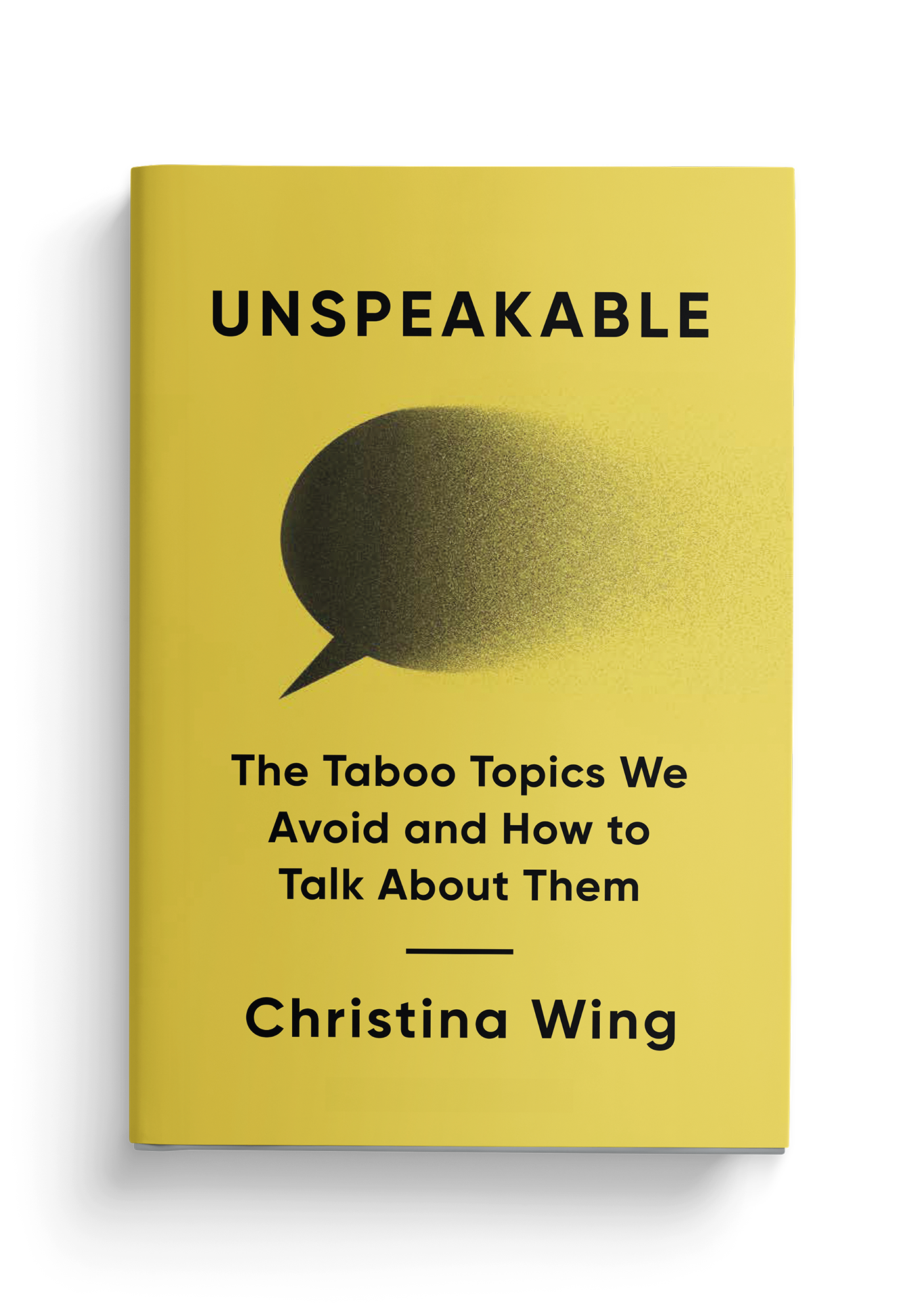
Christina’s new book, Unspeakable, takes on the subjects we avoid most: money, succession, failure, fear, and mortality. It offers the questions and language to help you begin. Out October 20 from Harvard Business Review Press.
Want to start reading today? Read the introduction free. ↗
 AVAILABLENOW